Seasonal choices: Grow cool-season crops (carrots, peas) in spring/fall and warm-season crops (peppers, beans) in summer.
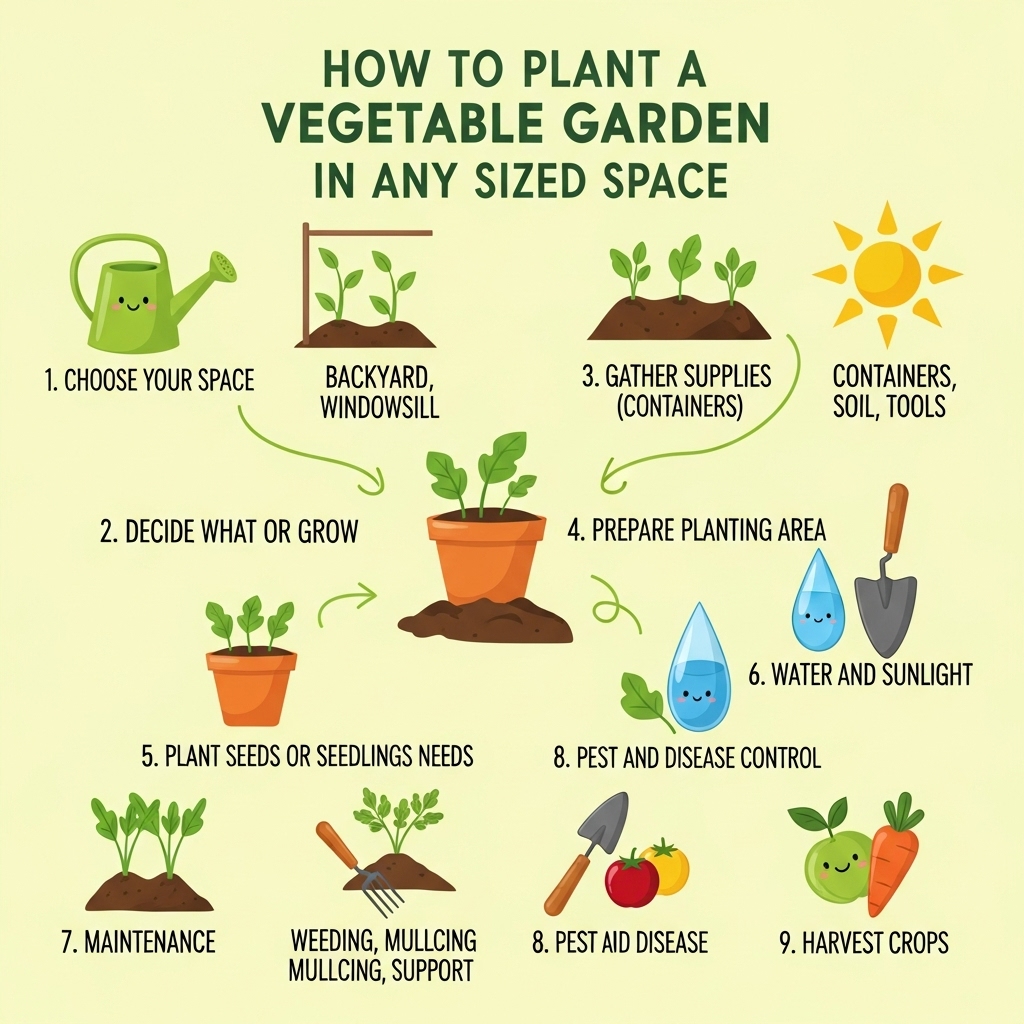
Step 3 – Gather Your Supplies
You’ll need:
Containers or raised beds (ensure drainage holes)
High-quality soil and compost
Basic tools: Trowel, gloves, watering can or hose
Step 4 – Prepare Your Planting Area
Remove weeds and debris.
Mix compost into the soil for nutrients.
Arrange containers for easy access and sunlight.
Step 5 – Plant Your Vegetables
Direct sowing: Plant seeds directly into the soil (e.g., carrots, beans).
Transplanting: Move seedlings grown indoors to your garden (e.g., tomatoes, peppers).
Follow spacing recommendations on seed packets to avoid overcrowding.
Step 6 – Watering and Sunlight Needs
Most vegetables need 6–8 hours of sunlight daily.
Water deeply but less often to encourage strong roots.
Container plants may need more frequent watering, especially in summer.
Step 7 – Maintenance and Care
Weeding: Remove weeds regularly so they don’t compete for nutrients.
Mulching: Helps retain moisture and regulate soil temperature.
Support: Use stakes, cages, or trellises for climbing plants.
Step 8 – Pest and Disease Control
Natural remedies: Neem oil, soap sprays, or hand-picking pests.
Companion planting: Pairing certain plants (like basil with tomatoes) can repel pests.
Step 9 – Harvesting Your Crops
Pick vegetables at peak ripeness for best flavor and nutrition.
Regular harvesting encourages more production in many plants.
Gardening in Small Spaces – Tips and Tricks
Vertical Gardening: Use trellises, wall planters, or hanging baskets.
Succession Planting: Plant new crops as soon as old ones finish.
Microgreens: Quick-growing and packed with nutrients.
FAQs
1. Can I garden without direct sunlight? Yes—choose leafy greens and herbs that tolerate partial shade.
2. How do I know when vegetables are ready to harvest? Check maturity dates on seed packets and look for size and color cues.
3. Can I reuse potting soil? Yes—refresh it with compost and remove any old roots.
Conclusion: From Seed to Table
No matter how small your space, you can grow fresh vegetables right at home. With a little planning, care, and patience, you’ll enjoy delicious, homegrown produce and the satisfaction of knowing you grew it yourself.
Newsletter Updates
Enter your email address below and subscribe to our newsletter