Physical Address
304 North Cardinal St.
Dorchester Center, MA 02124
Physical Address
304 North Cardinal St.
Dorchester Center, MA 02124

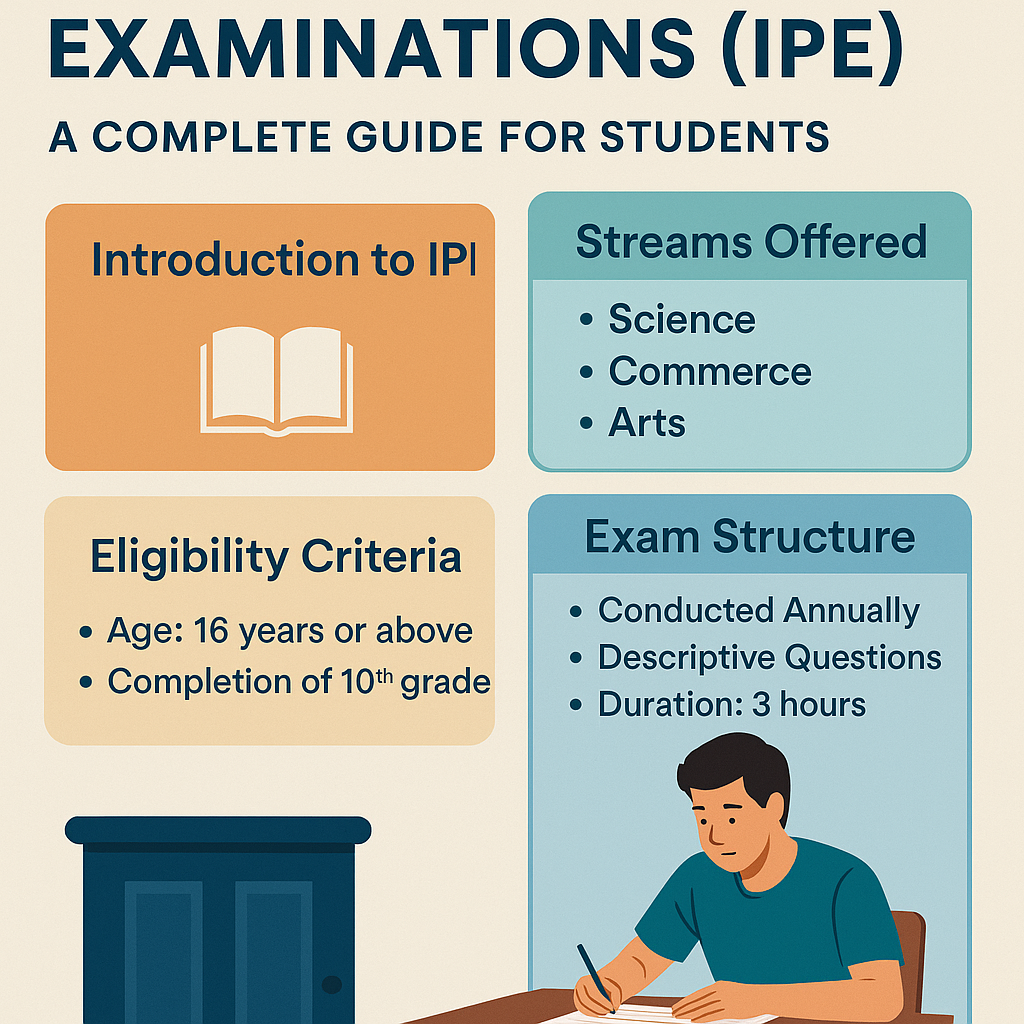
The Intermediate Public Examinations (IPE) are among the most significant academic milestones in a student’s life. Conducted at the state level, particularly in Andhra Pradesh and Telangana, IPE serves as the foundation for higher education and professional careers.
These exams not only assess a student’s grasp of concepts but also act as a gateway for university admissions, competitive exams, and career planning. Let’s explore everything you need to know about IPE — from its structure to preparation tips.
IPE marks the transition from school-level learning to specialized higher education. Performance in IPE often determines eligibility for professional courses like engineering, medicine, law, and commerce.
Strong IPE results open doors for higher education, scholarships, and direct entry into diploma and certificate programs.
Students can choose from three major streams:
Practicing mock exams enhances speed, accuracy, and confidence before the real test.
IPE follows a grading system based on marks scored. Grades range from A1 (Outstanding) to E (Fail). Results are crucial for determining eligibility for higher education courses.
Marks from IPE are often used for eligibility in JEE, NEET, and state-level entrance exams.
Strong foundations built in IPE subjects help aspirants later in competitive government exams. For example, the Common Eligibility Test (CET) evaluates reasoning, general knowledge, and aptitude — all areas strengthened through IPE studies.
Q1. What is IPE?
The Intermediate Public Examinations (IPE) are board exams conducted for students after Class 12 in states like Andhra Pradesh and Telangana.
Q2. Who can appear for IPE?
Students who have passed Class 10 and enrolled in a recognized intermediate college.
Q3. How are IPE results useful?
They are required for university admissions, scholarships, and competitive exam eligibility.
Q4. How many attempts are allowed for IPE?
Students usually get multiple attempts to improve their scores.
Q5. Is IPE tougher than board exams?
IPE is more advanced than Class 10 exams but manageable with proper preparation.
Q6. Do IPE marks matter for competitive exams?
Yes, they play a role in eligibility and preparation for exams like JEE, NEET, and CET.
The Intermediate Public Examinations (IPE) are more than just board exams — they shape a student’s academic future and career path. By preparing strategically, using the right resources, and staying consistent, students can excel in IPE and lay a strong foundation for higher education and beyond.
For career-oriented exams after IPE, you may also check out our guide on the Common Eligibility Test (CET) to understand government job opportunities.
